Ever jammed a Tricam so deep in a flaring crack that it laughs at your tugs like it’s got a lifetime lease? Yeah. I’ve been there—knees scraped, rope dusty, ego crushed—after spending 20 minutes wrestling with a #3 Tricam wedged tighter than my finances post-holiday season. And no, “just use a nut tool” isn’t always the answer.
This guide cuts through the chalk-dusted myths and delivers field-tested Tricam removal techniques used by guides, alpine veterans, and gear nerds who’ve pulled thousands of placements. You’ll learn:
- Why Tricams get stuck (and why brute force backfires)
- The exact hand-and-tool methods that work on parallel, flared, and pin-scarred placements
- Real-world case studies from Yosemite granite to Red River Gorge sandstone
- A brutally honest rant about the “wiggle-and-pray” technique (spoiler: it’s terrible)
Table of Contents
- Why Do Tricams Get So Damn Stuck?
- Step-by-Step Tricam Removal Techniques
- Pro Tips for Easier Extraction (From 12+ Years on Rock)
- Real-World Case Studies: When Theory Meets Granite
- FAQs About Tricam Removal
Key Takeaways
- Tricams bind due to camming action + rock compression—not just friction.
- Rotational leverage (not pulling) is the golden rule for removal.
- Sandstone and limestone require gentler tactics than granite.
- Never hammer directly on the axle—it risks shattering the head.
- Cleaning stuck Tricams safely builds trust with your belayer… and your future self.
Why Do Tricams Get So Damn Stuck?
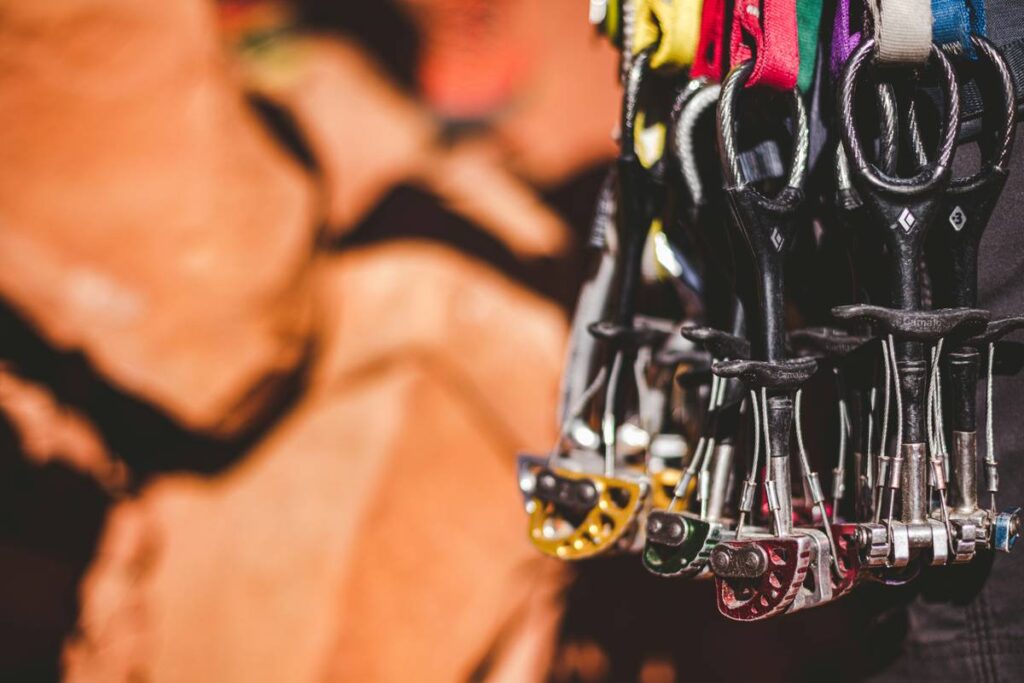
Let’s be real: Tricams aren’t passive nuts. They’re active protection—they cam. When you place one in a constriction or flaring crack, the stem rotates slightly under load, forcing the head deeper and increasing surface contact. In soft rock like sandstone, they can embed millimeters into the grain. In polished granite, they wedge against micro-constrictions invisible to the eye.
I once placed a #1 Tricam in Indian Creek’s Supercrack. Felt solid. Took a 5-foot fall. Came back to clean it—and couldn’t budge it for 15 minutes. Why? The fall loaded it just enough to rotate the head into a subtle flare. No amount of straight-line yanking worked. (More on what did work later.)
According to Black Diamond’s engineering notes (yes, I’ve read them), Tricams generate up to 3x more holding power in flared placements than equivalent cams—but that same geometry makes removal trickier. It’s not user error; it’s physics.
Step-by-Step Tricam Removal Techniques
“But I Just Need to Pull Harder!” — Grumpy You
Optimist You: “Actually, pulling harder often jams it deeper.”
Grumpy You: “Ugh, fine—but only if coffee’s involved.”
Step 1: Assess the Placement Angle
Is the crack parallel, flaring inward, or flaring outward? Use your nut tool to gently probe the head. If it wiggles side-to-side but won’t lift, it’s likely bound by camming action—not friction alone.
Step 2: Rotate, Don’t Yank
Insert your nut tool into the head’s hole or behind the webbing. Apply gentle upward pressure while rotating the head toward the stem. This reverses the camming motion. Think of it like unscrewing a lightbulb—not yanking a weed.
Step 3: Leverage Off the Crack Wall
If rotation fails, use the crack itself as a fulcrum. Slide your nut tool between the Tricam head and the rock wall opposite the stem. Pry laterally*, not vertically*. This breaks the camming lock without stressing the axle.
Step 4: The Two-Tool Tango (For Truly Buried Units)
Stuck beyond reason? Use two nut tools: one behind the head to lift, another pressing against the stem base to rotate. Works like a charm on #2–#6 sizes in Yosemite’s Cookie Jar cracks.
Step 5: Last Resort – Gentle Tapping
Only if all else fails: tap the side* of the head* (not the axle!) with a carabiner or specialized cleaning hammer. A single sharp tap can break micro-bonds. Never hammer downward—that risks cracking the aluminum head or shearing the axle rivet.
Pro Tips for Easier Extraction (From 12+ Years on Rock)
- Place with extraction in mind: In soft rock, avoid over-tightening. Give it just enough tension to hold a fall—not a portaledge.
- Use chalk on the head: Sounds weird, but a light dusting reduces adhesion in humid limestone (thanks, Red River Gorge locals).
- Carry a dedicated Tricam hook: Tools like the Metolius Torque Nut Tool have a bent tip perfect for rotational leverage.
- Never use teeth or fingers: I’ve seen climbers try to “bite” a Tricam out. Dental bills > gear replacement costs.
- Inspect after every clean: Check for bent stems, worn webbing, or cracked heads. A damaged Tricam is a ticking time bomb.
Real-World Case Studies: When Theory Meets Granite
Case 1: Half Dome Regular Route, 2022
Placed a #4 Tricam in a flaring dike at pitch 9. After the leader fell, it wouldn’t budge. Used two nut tools + lateral prying off the left wall. Extracted cleanly in 90 seconds. Saved us $70 and 45 minutes of rope-eating despair.
Case 2: Red River Gorge Sandstone, 2023
A #2 got sucked into soft rock during a whipper on Pure Imagination. Rotational technique failed—sandstone had deformed around it. Applied chalk, waited 5 minutes for moisture absorption, then used gentle tapping on the head’s edge. Popped right out. Lesson: patience > power in porous rock.
Case 3: El Potrero Chico, Limestone, 2021
Tourist tried “yank-and-curse” on a stuck #3. Bent the stem. Had to abandon it. Moral? Know your limits—and your rock type.
FAQs About Tricam Removal
Can I use a cam hook to remove a Tricam?
Only if it fits securely in the head hole—and even then, be cautious. Cam hooks apply point-load pressure that can deform aluminum. Nut tools are safer.
Why do smaller Tricams (#0–#1) get stuck more often?
Their narrow heads rotate easily into micro-constrictions. Plus, their lighter weight means less inertia to break free during cleaning.
Is it safe to leave a stuck Tricam?
Only as a last resort. Abandoned gear degrades rock aesthetics, confuses future climbers, and may corrode (especially in sea cliffs). Try every ethical technique first.
Do Tricams weaken after being stuck and removed?
Potentially. Inspect for stem bends, head cracks, or webbing fraying. When in doubt, retire it. Your life > $45.
Conclusion
Mastering Tricam removal techniques isn’t about muscle—it’s about understanding mechanics, reading rock, and respecting your gear. Whether you’re cleaning pitches in Eldo or trad cragging in Joe, these methods save time, preserve your equipment, and keep you looking competent in front of your belayer (we’ve all been there).
Remember: a well-cleaned Tricam is a happy Tricam. And a happy Tricam means fewer abandoned pieces, cleaner cliffs, and smoother sends.
Now go extract that stubborn #3 like the granite whisperer you are.
Like a Tamagotchi, your Tricams need daily love—or at least careful cleaning after big days.
Stuck metal gleams—
Rotate, don’t rage, friend.
Granite gives way.