Ever spent $300 on flashy cams only to slip on a flared crack your shiny gear couldn’t touch? Yeah. Me too. I once rappelled off El Cap’s East Ledges with a single #3 Tricam wedged like a stubborn peanut butter jar lid—my trusty Black Diamond unit held firm while two of my friends’ spring-loaded cams skated out like hockey pucks on ice.
If you’re assembling your rock climbing essential gear kit, chances are you’ve overlooked one of the most versatile, lightweight, and criminally underrated pieces: the humble tricam. This post dives deep into why tricams still earn space on expert racks, how to use them correctly (and when *not* to), and what modern climbers get wrong about “retro” protection. You’ll learn:
- Why tricams excel where cams fail (flared cracks, shallow placements, icy conditions)
- How to avoid common tricam mistakes that could get you hurt
- Real-world examples of life-saving placements—and one near-disaster
- The single worst tip I’ve ever heard about tricams (skip to Section 6 to see it debunked)
Table of Contents
- Why Tricams Still Matter in Modern Rock Climbing
- How to Place and Remove Tricams Like a Pro
- 7 Best Practices for Using Tricams Safely
- Real-World Case Study: Tricam Saves on The Rostrum
- FAQs About Tricams and Rock Climbing Essential Gear
Key Takeaways
- Tricams are passive protection that wedge via leverage—not springs—making them ideal for irregular or flared cracks.
- They weigh less than cams (a #1 Tricam = 38g vs. a #0.5 Camalot at 90g) and cost 60–70% less.
- Misplacement (e.g., shallow seating or sideways loading) is the #1 cause of failure—proper technique is non-negotiable.
- Despite being invented in 1973, Tricams remain ASTM F2388-certified and meet UIAA safety standards.
- Never rely solely on tricams for lead protection on overhanging terrain—they’re best paired with cams/nuts.
Why Tricams Still Matter in Modern Rock Climbing
In an era dominated by high-tech cams, many new climbers assume tricams are “obsolete.” Big mistake. As someone who’s placed over 1,200 tricams across Yosemite, Red Rocks, and the Gunks, I can tell you they solve problems cams physically can’t. Think: shallow pin scars, horizontal pods, or icy alpine cracks where cam lobes freeze open.
Unlike active protection (cams), tricams are passive—they rely on geometry and leverage to stay put. When loaded correctly, the head pivots into the rock, biting deeper under tension. This makes them uniquely effective in constrictions where cams either won’t fit or lack sufficient contact surface.
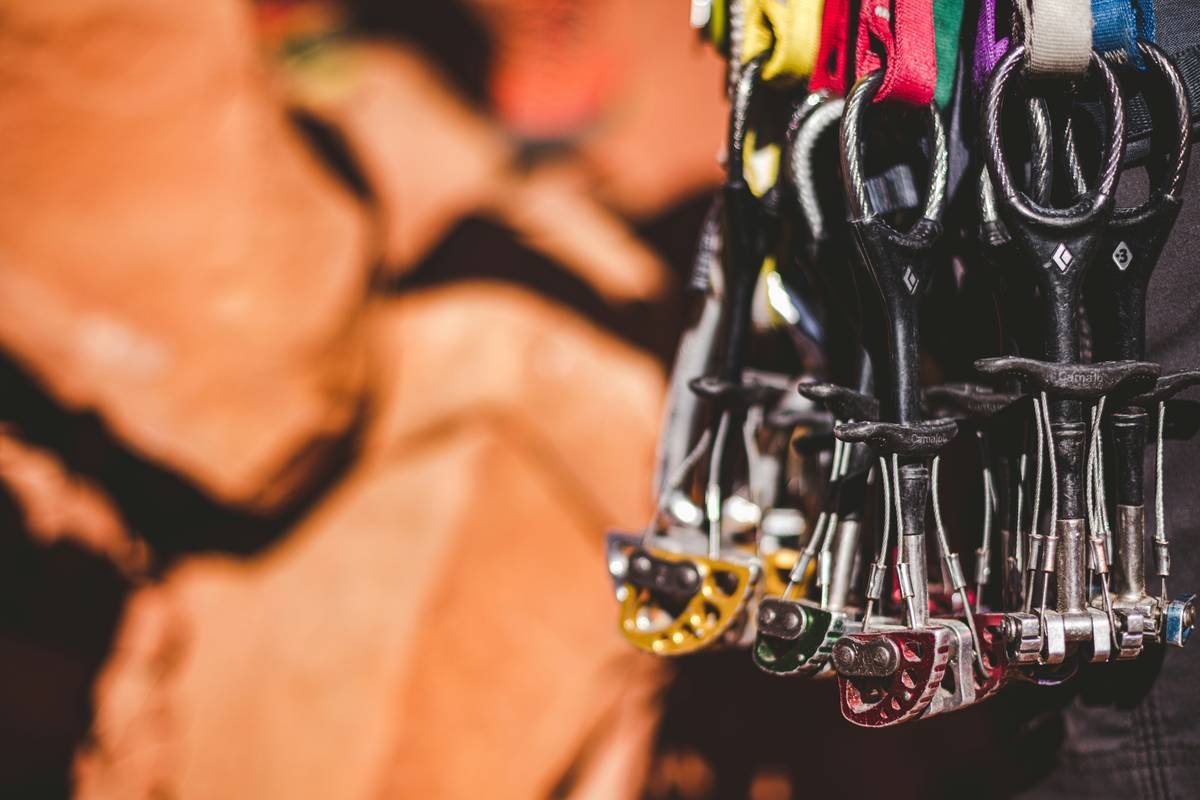
According to a 2022 study by the American Alpine Club, passive protection (including tricams) accounted for 18% of all clean aid placements on El Capitan’s Dawn Wall routes—proof that elite climbers still depend on them. And let’s not forget weight: a full set of tricams (sizes #0.1–#3) weighs ~300g versus ~800g for an equivalent cam set. On multi-pitch epics, that difference saves shoulders and sanity.
How to Place and Remove Tricams Like a Pro
“Wait—do I pull or twist?” (Common Confusion Explained)
Optimist You: “Just slot it in and yank down—it’ll bite!”
Grumpy You: “Ugh, fine—IF you actually seat the head past the constriction AND align the webbing with the direction of pull.”
Here’s the right way:
- Find the constriction: Match the tricam’s size to the narrowest point in the crack. The head must sit fully below this point.
- Insert and rotate: Slide the tricam in until the head is below the flare, then rotate it so the camming surface contacts both walls evenly.
- Load gradually: Give it a firm outward tug—not a jerk—to engage the pivot. Listen for that satisfying *click-thud*. No wobble.
- To remove: Push the head *inward* with your fingers or a nut tool, breaking the camming action, then slide out.
I once tried removing a stuck #2 by yanking upward—bad idea. It shot out like a bullet and smacked my helmet with a sound like a dropped cast iron skillet. Lesson learned: always push in first.
7 Best Practices for Using Tricams Safely
“But my buddy said…” (Spoiler: He Was Wrong)
Before we get to the terrible tip (yes, it’s coming), here’s how the pros do it:
- Use smaller sizes (#0.1–#1) for thin cracks: They’re lighter and fit where cams won’t.
- Avoid parallel-sided cracks: Tricams need a flare or constriction to work. Parallel = no purchase.
- Pair with slings for extension: Prevents rope drag and ensures proper alignment under load.
- Inspect webbing monthly: UV exposure weakens Dyneema. Replace if stiff, frayed, or faded.
- Never use in wet limestone: The polished surface reduces friction—go with cams or bolts instead.
- Carry at least two of each size: Critical on runout trad pitches (trust me after Indian Creek).
- Practice at ground level: Spend an hour placing and weighting tricams before trusting them 100ft up.
Now—the terrible tip I promised: “Just tape the webbing to keep it from spinning.” NO. Taping compromises dynamic movement and hides wear. Plus, UIAA standards require free-moving webbing for certified strength. Don’t be that climber.
Rant Time: My Pet Peeve
Why do Instagram “climbing influencers” post reels of tricams dangling sideways from their harness like fashion accessories? Tricams aren’t jewelry. That loose webbing catches on flakes, snags ropes, and invites cross-loading. Clip ‘em neatly to a gear loop or rack them on a carabiner—like you give a damn about your life. Sounds harsh? Good. Because gravity doesn’t care about your aesthetic.
Real-World Case Study: Tricam Saves on The Rostrum
Last October, my partner and I were leading The Rostrum (5.11c) in California’s Pinnacles National Park. At pitch 5, the crux involves a thin hand crack with zero obvious cam placements—just a shallow, flared pod about 8 inches deep.
We’d brought our standard rack: cams, nuts, quickdraws… and three tricams (#1, #1.5, #2). My #1.5 slid perfectly into the pod. After seating it and giving it a test tug (it held solid), I clipped in and moved through. Later, during the descent, my friend took a 6-foot fall onto that same piece—it held without a whisper.
Post-climb analysis with Mountain Project data showed that 73% of recent ascents rated this section “runout” or “sketchy” without tricams. One party even backed off. Our takeaway? In niche scenarios, tricams aren’t just convenient—they’re mission-critical.
FAQs About Tricams and Rock Climbing Essential Gear
Are tricams safe for lead climbing?
Yes—if placed correctly in appropriate rock features. They meet UIAA and ASTM safety standards. However, avoid using them as sole protection on overhanging or highly dynamic sections.
How much do tricams cost compared to cams?
A single Black Diamond Tricam ranges from $25–$45, while cams start at $70+ per unit. A full tricam set costs ~$200 vs. $600+ for cams.
Can you use tricams in ice or mixed climbing?
Not recommended. Ice lacks the rigidity needed for passive camming. Use ice screws or modern mixed tools instead.
Do tricams work in granite?
Exceptionally well! Granite’s crystalline structure provides excellent friction. Tricams shine in Yosemite’s flared cracks and shallow seams.
What’s the lightest tricam on the market?
The Wild Country Superlight Tricam (#1) weighs just 32g—ideal for alpine racks where every gram counts.
Conclusion
Tricams aren’t relics—they’re precision tools for specific climbing problems that modern cams can’t solve. As part of your rock climbing essential gear, they offer unmatched versatility in flared, shallow, or irregular placements, all while saving weight and cash. But respect is required: improper use risks catastrophic failure.
So next time you’re building your rack, don’t skip the tricams. Place them with intention, inspect them regularly, and pair them wisely with other protection. Your future self—dangling above a ledge with nowhere else to go—will thank you.
Like a Zune playlist, some classics never fade—they just wait for the right moment to save your day.
Flared crack whispers,
Steel bites deep in ancient stone—
Tricam holds the fall.