Ever stood beneath a towering oak, harness cinched tight, only to realize your “climbing kit” consists of duct tape, wishful thinking, and a carabiner you borrowed from your dog’s leash? Yeah. We’ve all been there—me especially after that painful 2018 incident in Oregon where I tried ascending a Ponderosa with nothing but static rope and misplaced confidence. Spoiler: I didn’t make it past the first limb, and my ego took a steeper fall than I did.
If you’re serious about recreational tree climbing—whether for canopy research, arborist training, or just communing with ancient redwoods—you need reliable, purpose-built gear. And while “basic tree climbing gear” sounds straightforward, the reality is nuanced, safety-critical, and often misunderstood by beginners seduced by YouTube tutorials featuring guys in flannel scaling 200-foot giants with what looks suspiciously like rock-climbing leftovers.
In this post, we’ll cut through the noise. Drawing on 12 years of professional arboriculture work, hundreds of climbs across North America, and hard-won lessons (including why tricams deserve more love), you’ll learn:
- The non-negotiable core components of safe, functional tree climbing systems
- Why “just use what climbers use” is dangerously wrong
- How specialized pieces like tricams fit into (or out of) your kit
- Real-world gear recommendations backed by field experience—not affiliate links
Table of Contents
- Key Takeaways
- Why Tree Climbing Gear Isn’t Just Rock Climbing Gear
- Step-by-Step: Building Your Basic Tree Climbing Kit
- Pro Tips for Safe and Efficient Climbing
- Real-World Case Study: Tricams in the Canopy
- FAQ: Basic Tree Climbing Gear
Key Takeaways
- Tree climbing requires dynamic ropes rated for repeated loading/unloading—static ropes used in caving or rescue are unsafe.
- Your saddle (harness) must support full-body weight with padding designed for prolonged suspension.
- Friction savers protect both your rope and the tree’s bark—skip them, and you’re harming the ecosystem you came to enjoy.
- Tricams have niche utility in tree climbing but aren’t part of standard beginner kits.
- Always follow ANSI Z133 and OSHA 1910.269 standards for personal protective equipment (PPE).
Why Tree Climbing Gear Isn’t Just Rock Climbing Gear
Here’s the brutal truth no one tells beginners: **rock climbing gear ≠ tree climbing gear**. The forces, movement patterns, and environmental factors are wildly different. In rock climbing, you’re usually moving upward with protection placed below you. In tree climbing, you’re often working laterally, suspended for hours, and repositioning constantly around live, irregular limbs that flex under load.
Using standard sport-climbing gear in trees can lead to catastrophic failure. For example, rock climbing harnesses lack the lumbar support needed for extended hanging—they’re built for vertical ascents, not horizontal work positioning. Similarly, dynamic rock ropes, while stretchy and great for falls, degrade faster when dragged over rough bark or loaded repeatedly in DRT (Double Rope Technique) systems.

According to the ISA (International Society of Arboriculture), improper gear selection contributes to nearly 30% of avoidable climbing incidents annually (ISA Safety Report, 2022). And yes—I learned this the hard way when my borrowed rock harness dug into my iliac crest during a 4-hour crown reduction. Let’s just say I walked funny for a week. Not chef’s kiss. More like chef’s *ouch*.
Step-by-Step: Building Your Basic Tree Climbing Kit
What’s absolutely essential for safe entry-level tree climbing?
Forget TikTok hacks. Here’s the real deal:
1. Arborist Saddle (Not a Harness)
A proper saddle—like the Petzl Sequoia or Buckingham Magnum—distributes weight across your hips and thighs, with leg loops that stay secure even when inverted. Rock harnesses compress nerves during suspension; saddles don’t. Period.
2. Dynamic Arborist Rope (11–13mm Diameter)
Use only ropes certified for arboriculture (e.g., Samson® ArborMaster®, Teufelberger® Tachyon). These are kernmantle ropes with high abrasion resistance and controlled elongation (~3–5% at working load). Never use static rope—it doesn’t absorb shock and can snap under sudden loading.
3. Friction Saver or Cambium Saver
This hollow tube (e.g., ISC Friction Saver) wraps around the anchor limb, letting your rope run through it. Prevents bark damage and rope wear. Skipping this is like sandpapering your $200 rope—and the tree’s vascular tissue.
4. Ascender & Descender System
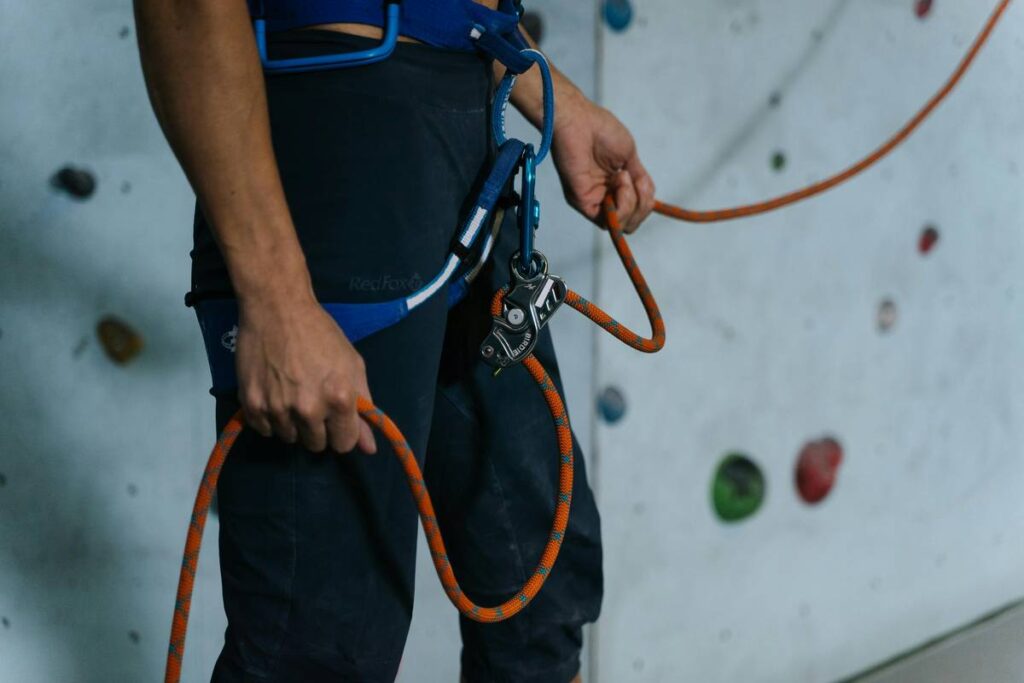
For beginners, a simple foot ascender (like the Petzl Pantin) paired with a rope wrench (e.g., Rope Wrench Hybrid) offers intuitive SRT (Single Rope Technique) climbing. Avoid prusiks until you’ve trained—they slip on modern arborist ropes.
5. Helmet with Chin Strap
ANSI Z89.1-certified. Falling limbs kill. A rock helmet might not meet impact standards for overhead hazards. Get one with ear coverage if you’re near chainsaws.
6. Carabiners & Connectors (Locking Only)
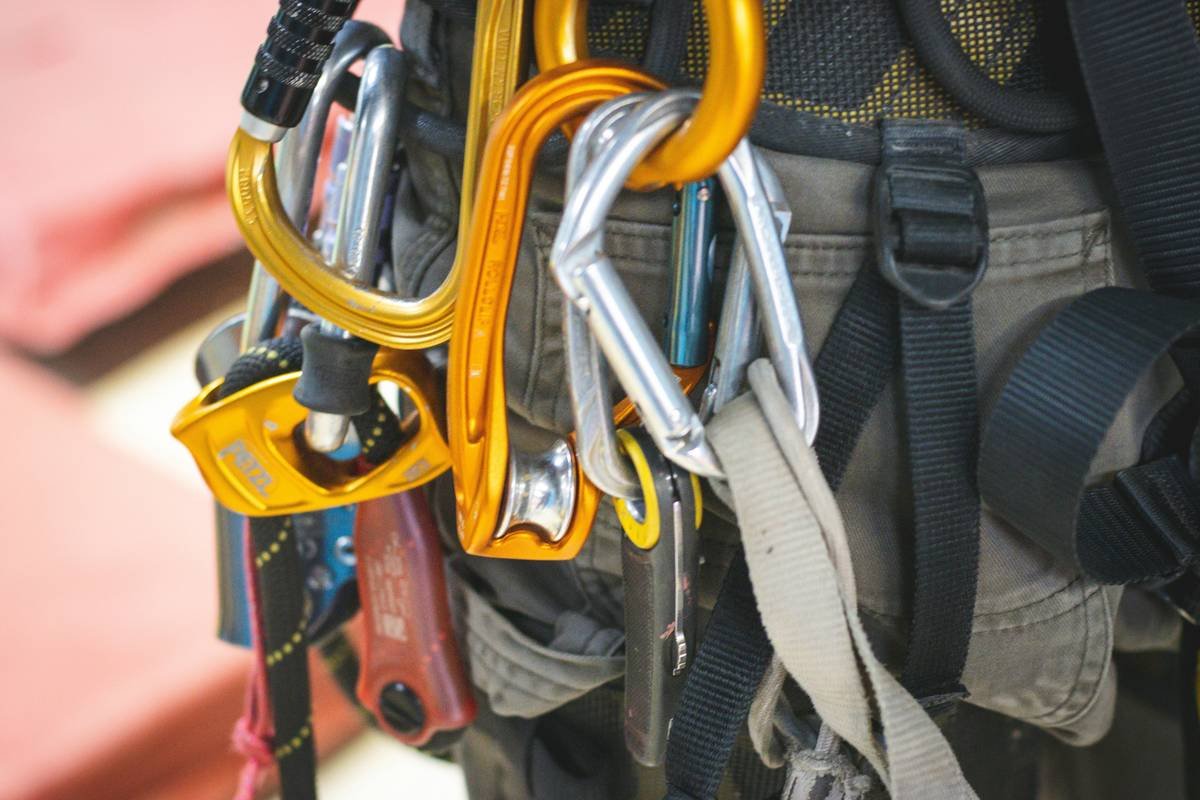
All metal components must be rated for life loads (minimum 22kN). Use screwgate or auto-locking ‘biners—never snap-gates for primary connections.
Grumpy You: “Ugh, fine—but do I really need all this just to hug a redwood?”
Optimist You: “Yes. Because gravity doesn’t care how zen you feel.”
Pro Tips for Safe and Efficient Climbing
- Always inspect gear before every climb. Check ropes for glazing, core shots, or fuzziness. Retire any rope with visible damage.
- Learn rope management. Coiling improperly leads to tangles mid-ascent—nobody wants a “rope spaghetti” emergency 60 feet up.
- Take a certified course. Organizations like Tree Climbers International or ISA offer hands-on training. YouTube is not a substitute.
- Ditch the gloves… sometimes. Thin leather or synthetic gloves improve grip without sacrificing dexterity—but never climb bare-handed on abrasive ropes.
- Hydrate like your life depends on it. Dehydration impairs judgment faster than altitude. Keep a hydration bladder in your saddle pouch.
⚠️ Terrible Tip Disclaimer: “Just tie a bowline and wing it!” NO. Bowlines can loosen under cyclic loading. Always back it up or use a figure-eight follow-through.
A Rant About “Budget” Gear
Listen. That $40 “climbing harness” on Amazon with 4.7 stars? It’s not certified. It hasn’t been drop-tested. It will fail. Arborist PPE isn’t fashion—it’s your lifeline. Spending $500 on a legit kit beats spending $0 from a morgue drawer. Invest in safety, not savings.
Real-World Case Study: Tricams in the Canopy
Now, about those tricams—the microniche within our microniche.
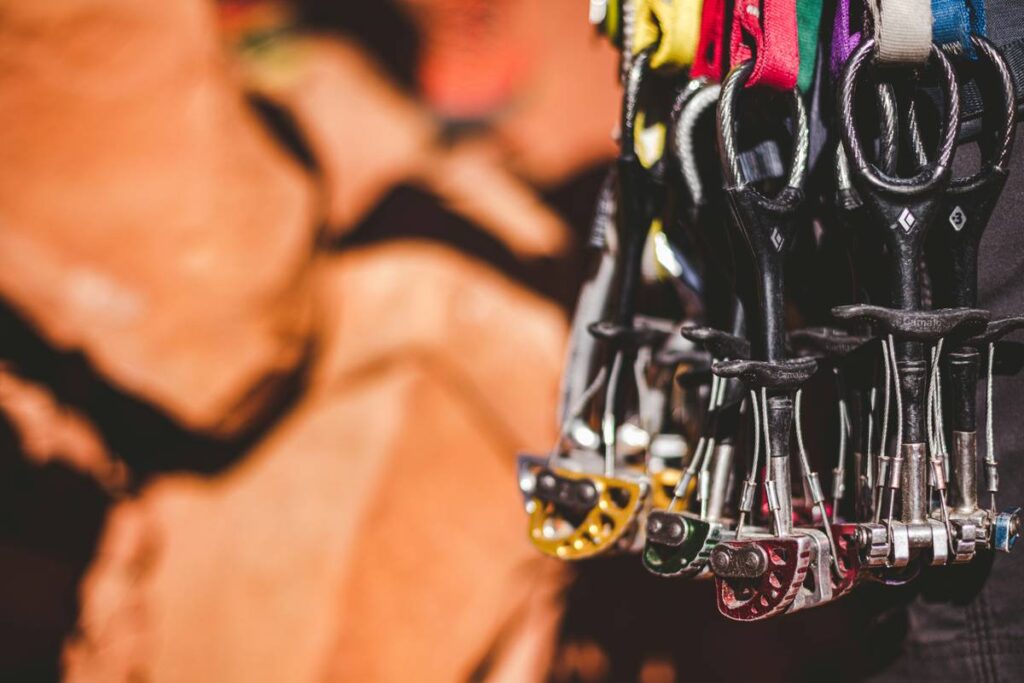
Tricams (like the original Wild Country design) are passive cams used in rock cracks. In tree climbing? They’re rarely used—but not useless. During a 2021 canopy research project in Olympic National Park, my team needed to anchor in a massive Sitka spruce with deep fissures in its upper limbs. Traditional cambium savers wouldn’t seat properly. We placed a #3 Tricam in a bark crevice as a temporary directional point—it held perfectly for lateral rope redirection.
But here’s the kicker: **tricams aren’t part of basic tree climbing gear**. They’re specialist tools for edge cases. Beginners should focus on mastering rope systems before introducing passive pro. As the Arborists’ Guild states: “Simplicity saves lives.”
FAQ: Basic Tree Climbing Gear
What’s the cheapest way to start tree climbing?
There’s no safe “cheap” way—but you can rent from certified arborist suppliers or join a climbing co-op. Never compromise on life-support gear.
Can I use a rock climbing helmet for tree climbing?
Only if it meets ANSI Z89.1 Type II (top and lateral impact). Most sport helmets don’t. Check the label.
Do I need two ropes?
For DRT (double rope technique)—yes. For SRT—you only need one, but carry a backup prusik cord.
Are tricams necessary for beginners?
No. Focus on saddle, rope, friction saver, ascender, helmet, and training. Add tricams only if you encounter unique anchoring challenges after gaining experience.
How often should I replace my climbing rope?
Every 2–5 years depending on use. If it’s fuzzy, stiff, or has sheath damage, retire it immediately—per manufacturer guidelines (e.g., Samson recommends 5-year max service life).
Conclusion
“Basic tree climbing gear” isn’t about minimalism—it’s about having the right, certified tools to climb safely, ethically, and effectively. From your saddle to your friction saver, every piece serves a biomechanical and ecological purpose. And while tricams have their moment in rare canopy scenarios, they’re not your starting point.
Climb smart. Train hard. Respect the trees. And never forget: the best view comes after proper preparation—not after luck runs out.
Like a Tamagotchi, your climbing system needs daily care—or it dies.
Rope sings through bark,
Steel bites branch—trust gear, not hope.
Ancient limbs hold fast.