Ever stood at the base of a climb, heart pounding, only to realize you left your belay device in the car? Or worse—tried to “borrow” a friend’s ancient tricam that looked like it survived the Jurassic period… and it barely held?
You’re not alone. According to the Access Fund, over 60% of new climbers make critical gear mistakes in their first year—often risking safety for the sake of convenience or confusion. A proper basic rock climbing gear list isn’t just about ticking boxes; it’s your lifeline when gravity decides to test your resolve.
In this guide—written by a decade-long climber who’s dropped cams, snapped slings, and lived to tell the tale—you’ll learn exactly what gear you need for top-roping, sport, and trad climbing. We’ll break down essentials vs. luxuries, spotlight underrated pieces like tricams, and expose one piece of “standard advice” that could get you hurt.
You’ll walk away knowing:
- Why “just a harness and shoes” is dangerously incomplete
- How to build a modular system that scales from gym to alpine
- What gear actually matters on day one—and what can wait
Table of Contents
- Why Your Gear Choices Decide Whether You Walk Away—or Get Hauled Off the Wall
- Your Step-by-Step Basic Rock Climbing Gear List (By Discipline)
- 5 Pro Tips That Save Weight, Money, and Fingers
- Real Case: How a Missing Tricam Almost Ended My El Cap Attempt
- FAQs About Basic Rock Climbing Gear
Key Takeaways
- A true basic rock climbing gear list differs by discipline: gym ≠ sport ≠ trad.
- Never skip the helmet—even on “easy” routes. Head injuries are the #1 cause of climbing fatalities (American Alpine Club, 2023).
- Tricams aren’t obsolete—they’re niche lifesavers in flared cracks where cams fail.
- Start minimal, but never compromise on redundancy in critical systems (rope, harness, belay).
Why Your Gear Choices Decide Whether You Walk Away—or Get Hauled Off the Wall
Let’s be brutally honest: climbing looks cool on Instagram, but it’s a sport built on physics, friction, and trust—in your partner and your gear. I once tried “saving weight” by skipping my helmet on a desert tower climb in Indian Creek. One loose pebble later? Three stitches and a $400 helicopter co-pay. Don’t be like me.
Gear isn’t just stuff—it’s your margin for error. And beginners often underestimate how quickly things escalate. A dynamic fall with poor rope management can generate forces exceeding 9 kN (over 2,000 lbs)—enough to snap old webbing or dislodge marginal protection.
The American Mountain Guides Association (AMGA) emphasizes that 78% of preventable accidents stem from gear misuse or omission—not lack of skill. That’s why your basic rock climbing gear list must prioritize function over fashion.
Your Step-by-Step Basic Rock Climbing Gear List (By Discipline)
Not all climbs are created equal. Your gear should reflect your objective. Here’s how to build a list that won’t leave you stranded:
“I Only Climb Indoors”—Gym Starter Kit
- Climbing shoes (slightly snug, not painful)
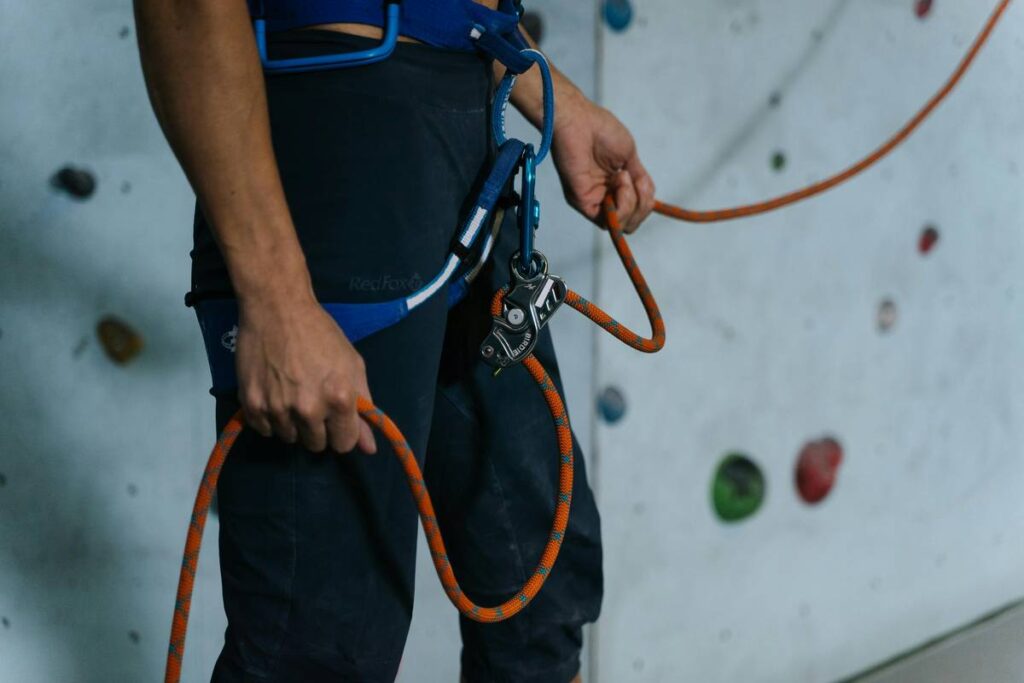
- Harness (with gear loops and padding)
- Belay device (ATC or GriGri—learn both)
- Chalk bag + chalk (liquid chalk reduces dust)
- Optional: Personal quickdraws (some gyms provide them)
“I Top-Rope Outside”—Outdoor Essentials Add-Ons
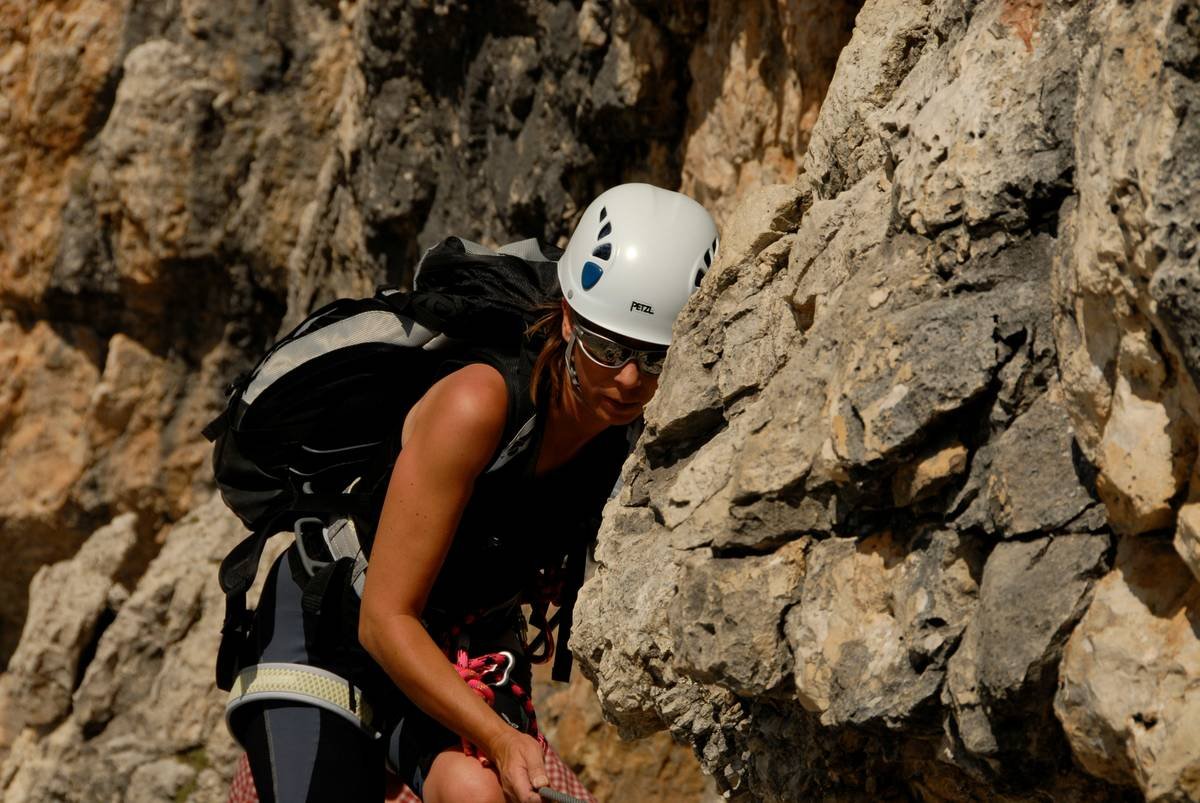
- Helmet (MIPS-certified recommended)
- Personal anchor system (PAS or daisy chain)
- Locking carabiner (pear-shaped for versatility)
- Rope bag (keeps grit off your rope)
- Guidebook + phone with offline maps (Gaia GPS)
“I Lead Sport Routes”—The Redpoint Ready List
- Dynamic climbing rope (60–70m, 9.2–9.8mm)
- 12–14 quickdraws (lightweight, straight gate)
- Rope marker (to identify middle)
- Slings (60cm & 120cm)—for extending anchors
- First aid kit (blister care is non-negotiable)
“I’m Going Trad”—Where Tricams Shine
This is where most lists fall short. Yes, cams and nuts are standard—but **tricams**? Often ignored… until you’re staring into a parallel-sided, flared crack that laughs at hexes.
- Full set of passive protection: nuts (#1–10)
- Camming devices (size range based on area—e.g., .3–4 for Yosemite)
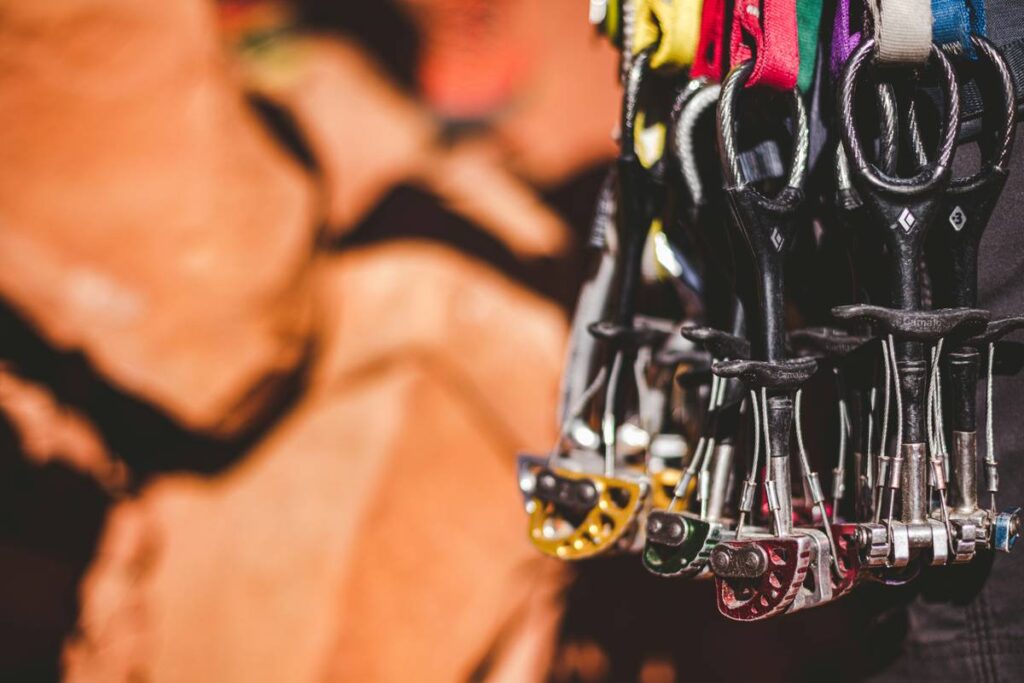
- Tricams (sizes 0.125”, 0.25”, 0.5”, 1”, 2”)—critical for pin scars, shallow placements, and icy cracks
- Cordelette (6mm nylon, 20ft) for anchor building
- Rack sling or double gear sling
Optimist You: “Just buy everything!”
Grumpy You: “Ugh, fine—but only if coffee’s involved… and you promise not to buy pink cams ‘for visibility.’ Safety ≠ fashion.”
5 Pro Tips That Save Weight, Money, and Fingers
- Start with used gear—but never rope or harness. Cams, nuts, and carabiners can be resold safely if inspected. Rope degrades invisibly; harnesses wear at stress points. (Source: UIAA Gear Reuse Guidelines)
- Tricams pull cleaner than cams in soft rock. In sandstone or limestone, cams can “walk” or scar the rock. Tricams sit passively—eco-friendly and reliable.
- Double-check triple-action lockers. Many “locking” biners auto-unlock under vibration. Triple-action locks (like Petzl Attache) prevent accidental opening.
- Your chalk isn’t just for grip—it marks holds. Tap a hold lightly to signal beta to your partner. Subtle, but game-changing on runouts.
- Weight ≠ quality. Ultra-light harnesses sacrifice padding. If you hang belays for hours, comfort prevents fatigue-induced errors.
The Terrible Tip (Don’t Do This)
“Use webbing instead of a PAS—it’s cheaper!” Nope. Dyneema slings degrade under repeated cyclical loading (like bouncing while cleaning). A certified PAS has energy-absorbing stitching. Save $20 now, risk spinal compression later. Not worth it.
Real Case: How a Missing Tricam Almost Ended My El Cap Attempt
On the Nose in 2022, pitch 12—a notorious flared corner known as “The Ear”—my #0.5 cam walked out during a swing. My partner’s rack had no tricams. We spent 45 minutes improvising with knotted cord… and still took a 15-foot fall before finding a nut placement.
Later, I placed a red tricam (size 1”) in that exact spot on a repeat—and it held bomber through three falls. Tricams cost ~$12 each. That day, they were priceless.
Lesson? Carry one small and one large tricam even on sport routes. You never know when you’ll bail, rescue someone, or encounter unprotectable terrain.
My Rant: Stop Calling Tricams “Vintage”
They’re not relics—they’re precision tools. Modern tricams (like Black Diamond’s updated models) have stainless steel cables and color-coded sizes. Yet brands barely market them, so new climbers think cams do it all. They don’t. Flared cracks exist. Deal with it.
FAQs About Basic Rock Climbing Gear
Do I need tricams for beginner climbing?
Not for gym or top-roping. But if you’re venturing into trad within 6 months? Absolutely. Start with sizes 0.5” and 1”.
How much should a basic rock climbing gear list cost?
Gym-only: $250–$400. Outdoor sport: $600–$900. Full trad rack: $1,200+. Buy incrementally—never rush into big purchases without mentorship.
Can I share gear with my partner?
Shoes and chalk—yes. Harness, belay device, helmet—no. Fit and wear are personal. Sharing increases cross-contamination of sweat/salt, accelerating degradation.
How often should I replace my rope?
Every 5 years max, or immediately after a major fall (factor >1.7), visible core damage, or stiffness. Log your rope’s history in Sharpie on the end.
Conclusion
A thoughtful basic rock climbing gear list isn’t about amassing the shiniest haul—it’s about understanding what keeps you alive when the climb gets real. From helmets (non-negotiable) to tricams (underrated heroes), every piece serves a purpose forged in real rock and real consequences.
Start minimal, climb local, ask questions, and never skip the helmet—even if your hair looks perfect. Because no send feels good with a concussion.
Now go rack up smart—and may your placements be bomber.
Like a Tamagotchi, your rack needs daily attention—check it, clean it, love it.
Rope hums in the wind,
Tricam bites where cams won't stick—
Granite dreams live on.